Designing a digital toolkit that informs and empowers cardiac rehab patients.
Background
In 2020, the coronavirus pandemic forced hospitals and community centres across the UK to cancel in-person cardiac rehabilitation classes, cutting patients off from a vital part of their recovery after a heart attack, heart surgery or stent procedure.
Cardiac rehab is normally an individualised programme run by healthcare professionals (HCPs), made up of exercise, education sessions and emotional support – typically two sessions a week for up to 12 weeks in a hospital or community setting such as a leisure centre. With that support suddenly unavailable, patients were left without the exercise, education and emotional support they would usually receive in person.
Brief
To develop a digital product, at pace, to support patients who could no longer attend their cardiac rehab programme because of coronavirus. The aim was to help keep patients safe and out of hospital by keeping them informed and motivated, and to support them in maintaining a self-care routine during lockdown.
I formed part of a working group consisting of a Product Manager and members of the Healthcare Innovation team including clinical and patient representatives.
Research & workshops
Empathy mapping
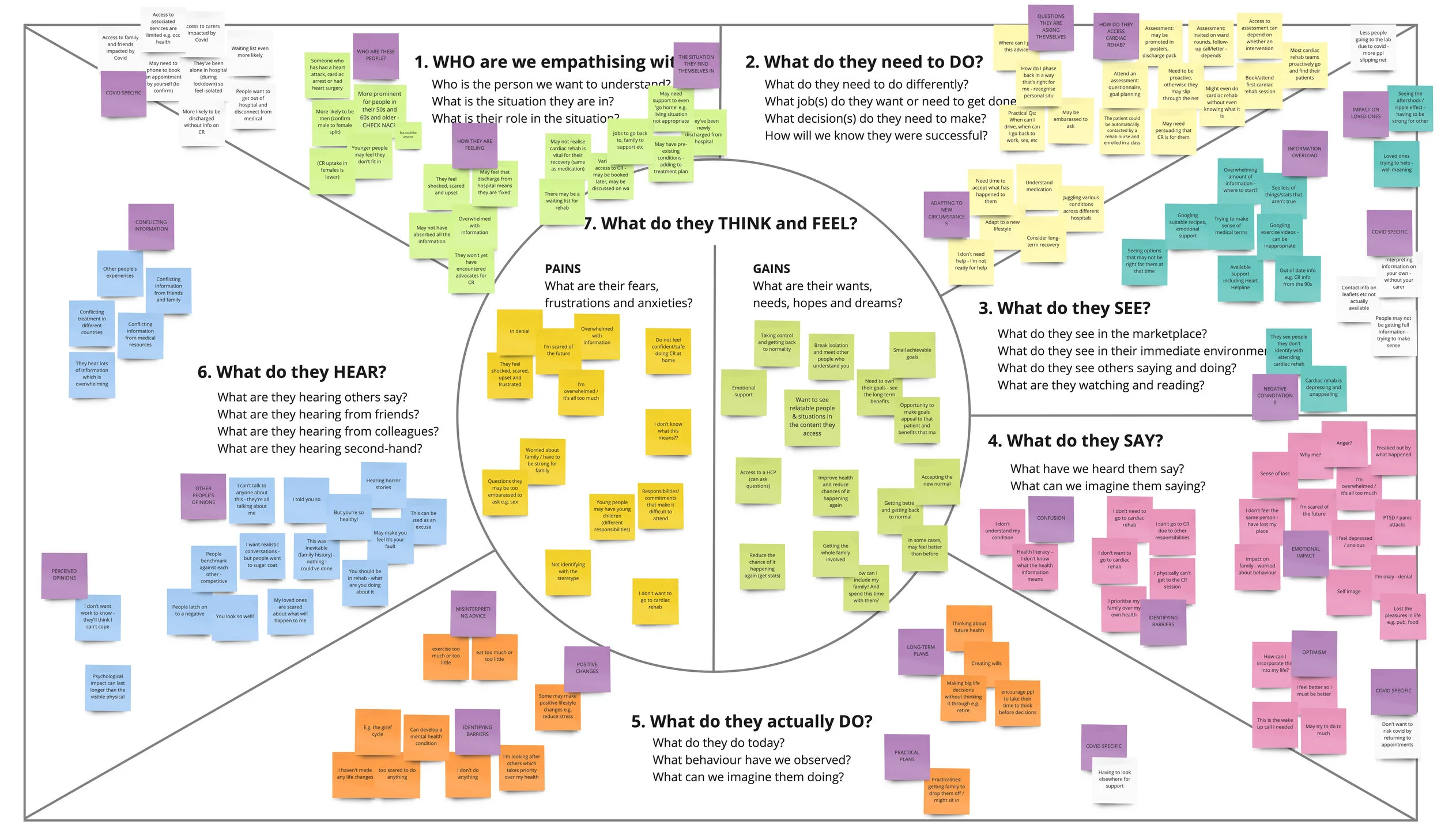
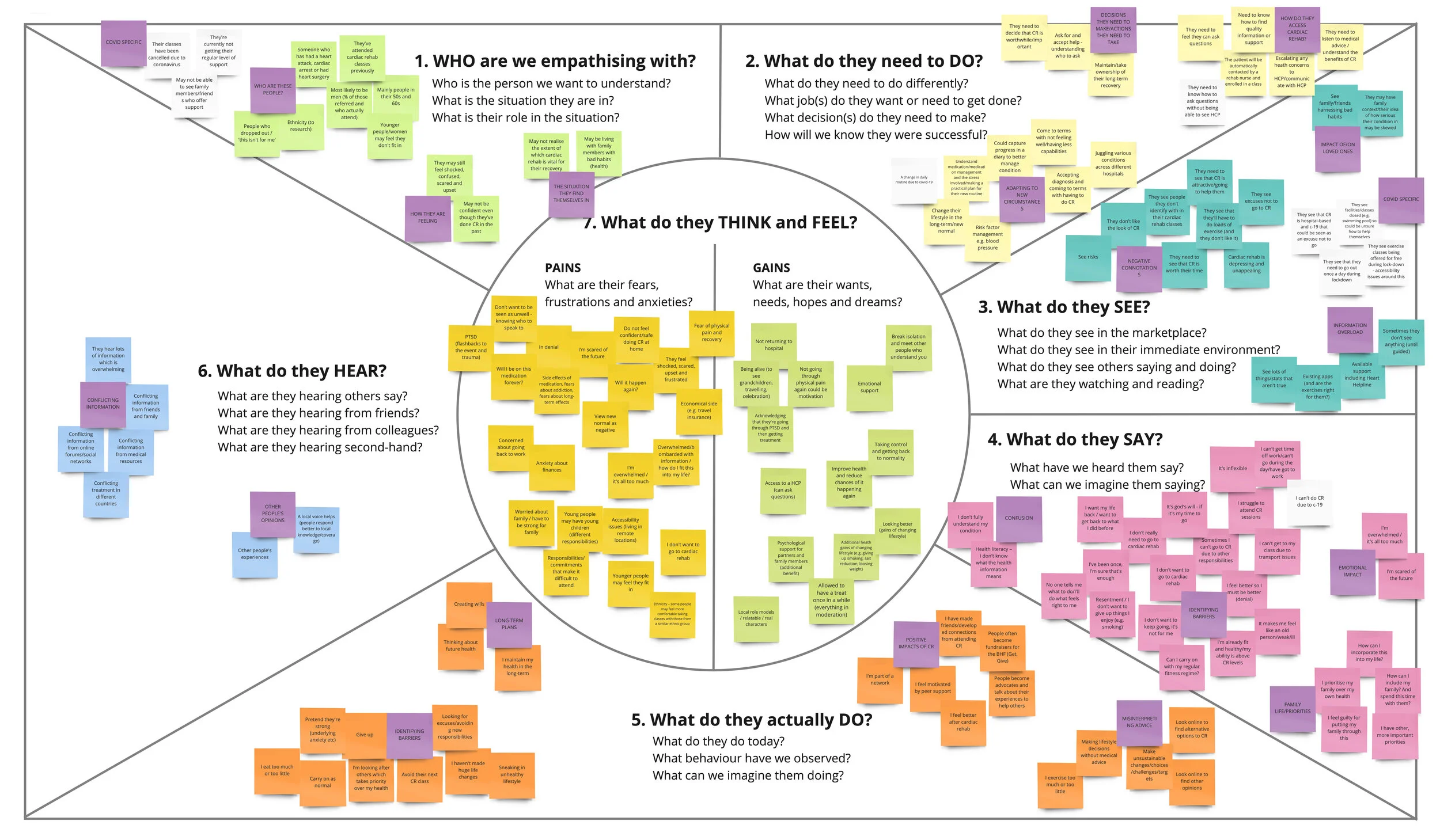
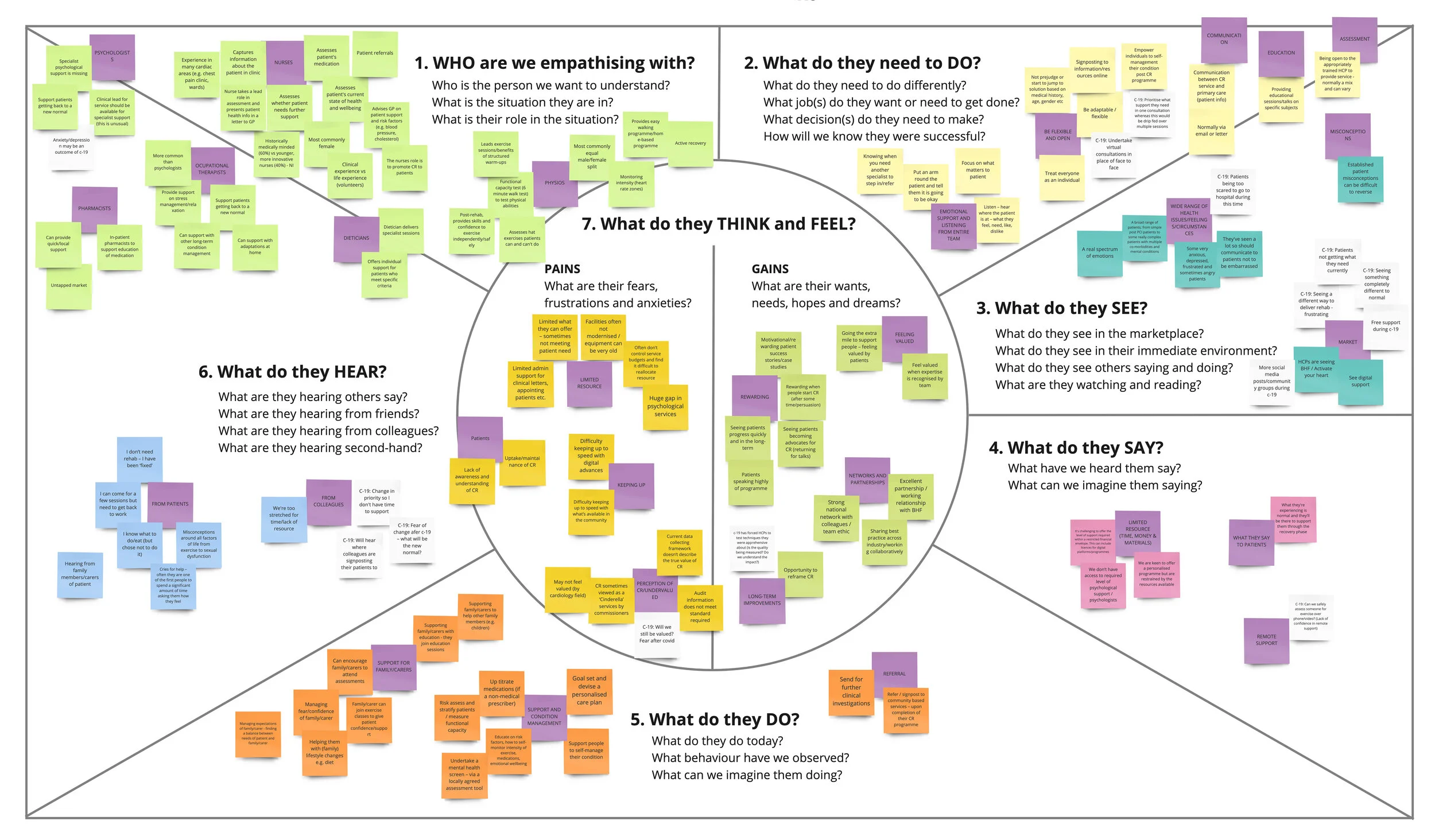
To begin with, I facilitated remote exercises in empathy mapping using Miro in order to capture the team’s combined customer knowledge and map out user attitudes, behaviours, needs and pain points. Following the session, the facilitators grouped the sticky notes into categories to help identify emerging themes.
The workshops provided an excellent approach to gathering insight across multiple teams with varying experience of cardiac rehab delivery. The sessions were facilitated extremely well and everyone felt that their views were valued.Health Services Engagement team
Competitor analysis
I investigated fourteen competitor health apps and websites and presented the findings back to the working group. These included Macmillan Cancer Support, Babylon Health and Headspace Inc.
Personas
The empathy mapping exercise above was used to inform our three key persona profiles. These profiles will be used as a reference at every stage of the project.
Patient starting rehab

- Name: John
- Age: 61
- Job: Electrician
- Location: Leicester
- BHF familiarity: Low
“I don’t fully grasp my condition or what cardiac rehab means for me and my family.”
Bio
John works as a full-time plumber and family man, living with his wife and two teenage daughters. Two months ago he had a heart attack and was given a lot of health information by his cardiac nurse. He’s now figuring out what to do next.
Behaviours
John and his family have started reading through the information from his cardiac nurse and doing some online research. He knows he’ll need to change his daily routine but hasn’t started yet.
Pains
- Worried about supporting his family emotionally and financially like before
- Overwhelmed by information and scared about his future health
Gains
- Wants to involve his family in his recovery
- Wants emotional support for himself and his family
- Wants support understanding cardiac rehab, medication and side-effects, plus practical advice on managing his condition at work
Patient maintaining rehab
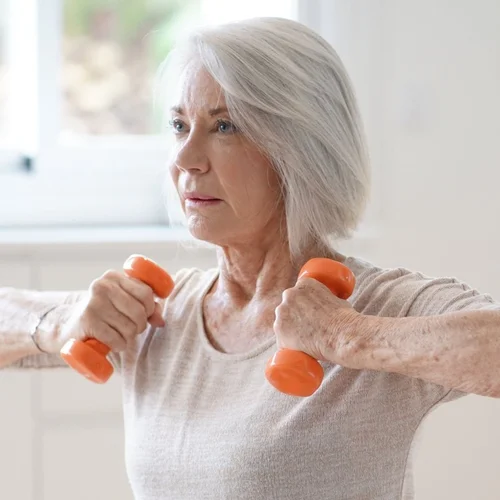
- Name: Amanda
- Age: 66
- Job: Retired
- Location: Birmingham
- BHF familiarity: Medium
“I’m struggling to maintain a new routine since the heart attack.”
Bio
Amanda is retired and stays active with her husband and a wide friendship group. Six months ago she had a heart attack and started attending cardiac rehab at her local leisure centre.
Behaviours
Amanda has started making dietary and exercise changes. She understands the importance of cardiac rehab but needs help maintaining her ‘new normal’.
Pains
- Struggles to stay motivated around her busy schedule
- Limited one-on-one time with the cardiac nurse means her questions aren’t always addressed
Gains
- Wants support with goal setting, motivation and maintaining a healthy lifestyle
- Feels part of a wider community through her cardiac rehab classes
HCP delivering rehab

- Name: Erica
- Age: 31
- Job: Cardiac Nurse
- Location: Newcastle
- BHF familiarity: High
“Limited time and resources means I can’t fully promote cardiac rehab to my patients.”
Bio
Erica is a cardiac nurse at Newcastle Freeman Hospital and a big advocate of cardiac rehab.
Behaviours
Before patients leave the cardiac ward, she signposts them to cardiac rehab information, understanding how important it is for their long-term recovery.
Pains
- Patients often dismiss cardiac rehab, not seeing its importance and just wanting their old life back
- Limited resources make it hard for Erica to explain and promote cardiac rehab
- Limited time (10–15 minutes per patient) means she can’t cover the benefits of cardiac rehab as much as she’d like
Gains
- A strong network of HCPs advocating cardiac rehab makes her feel part of a wider community
- Feels motivated hearing from patients whose quality of life has improved through cardiac rehab
Journey mapping
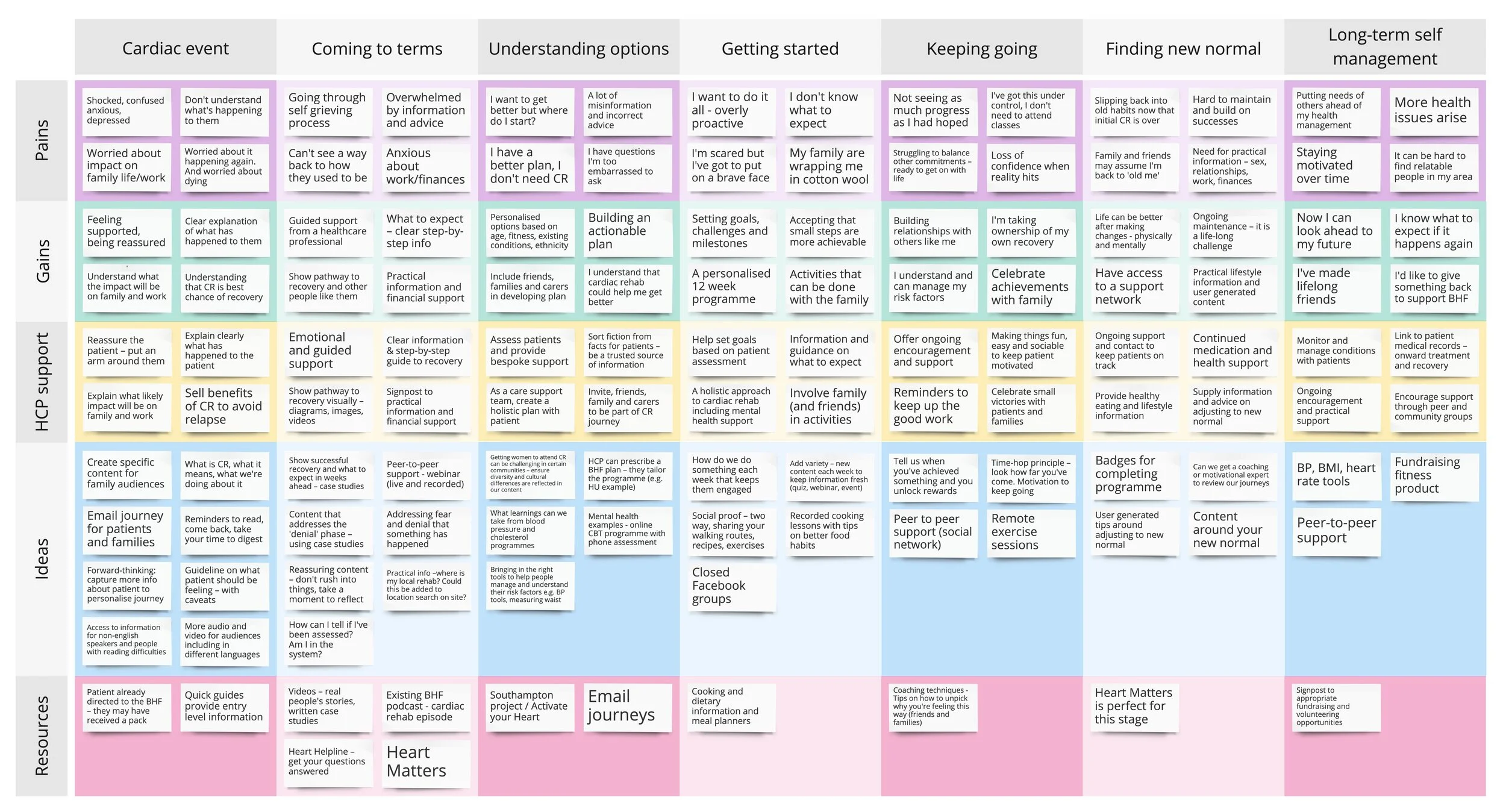
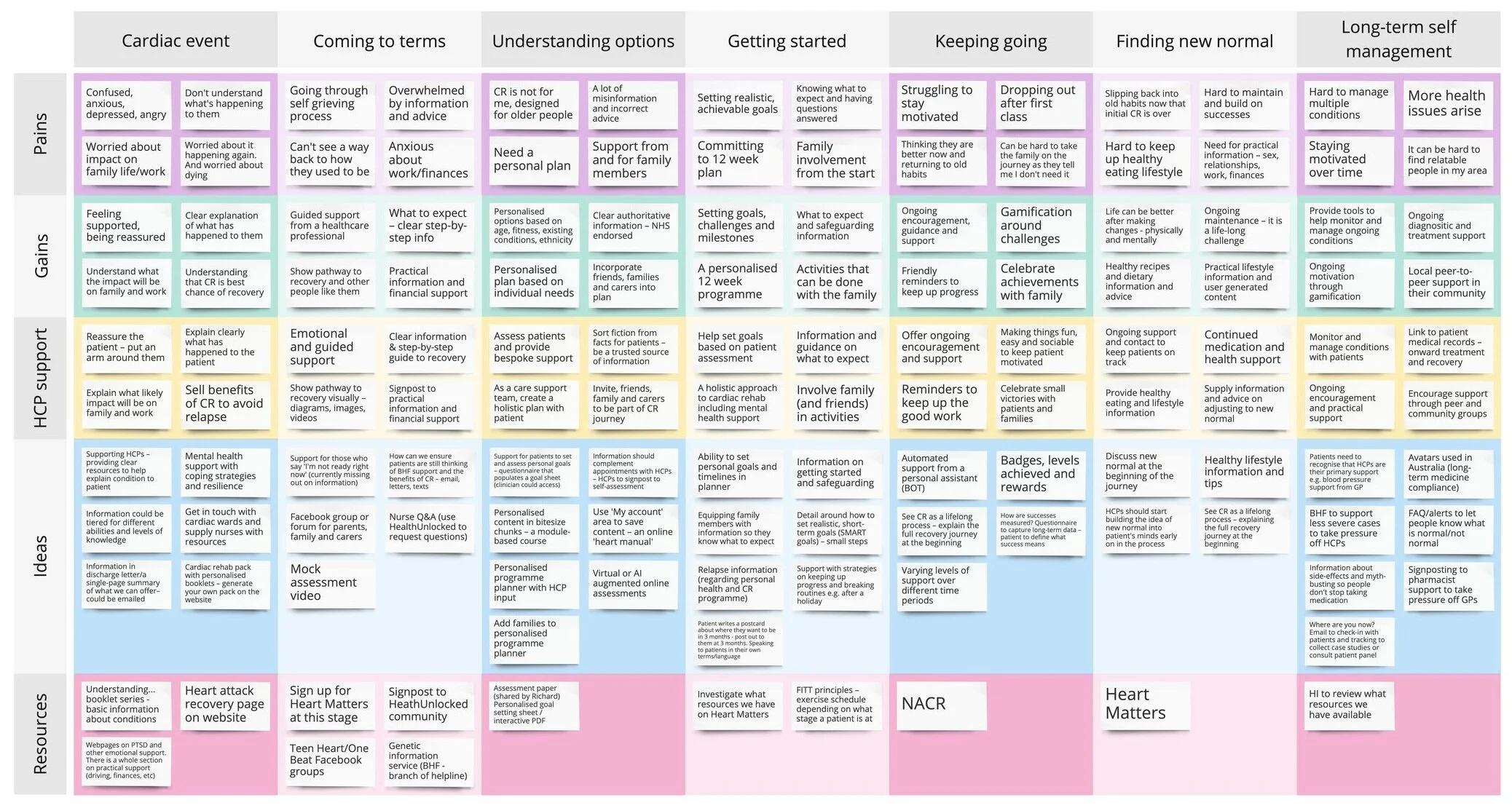
Next, I facilitated a remote journey mapping exercise using Miro to identify the stages of the end-to-end patient experience.
The pre-workshop communication and task introductions ensured that participants were coming informed and prepared to engage fully in the session.Health Services Engagement team, British Heart Foundation
Journey 1: Patient with good intentions
Journey 2: Patient who is lacking motivation
Ideation & prioritisation
Ideation exercise
I mapped our patient and HCP personas against motivational reward types – from digital badges and wall-of-fame features to flexible scheduling and access to a wider patient community. Along with insights from journey mapping, the facilitators took these ideas and categorised them in FunRetro by quick wins, achievable within three months, and achievable within a year. The working group voted for their top three favourite ideas in each column.
Value/effort matrix
Following the FunRetro exercise, we reviewed and plotted the voted ideas on a value/effort matrix to determine feasibility and identify those requiring further investigation.
Website designs
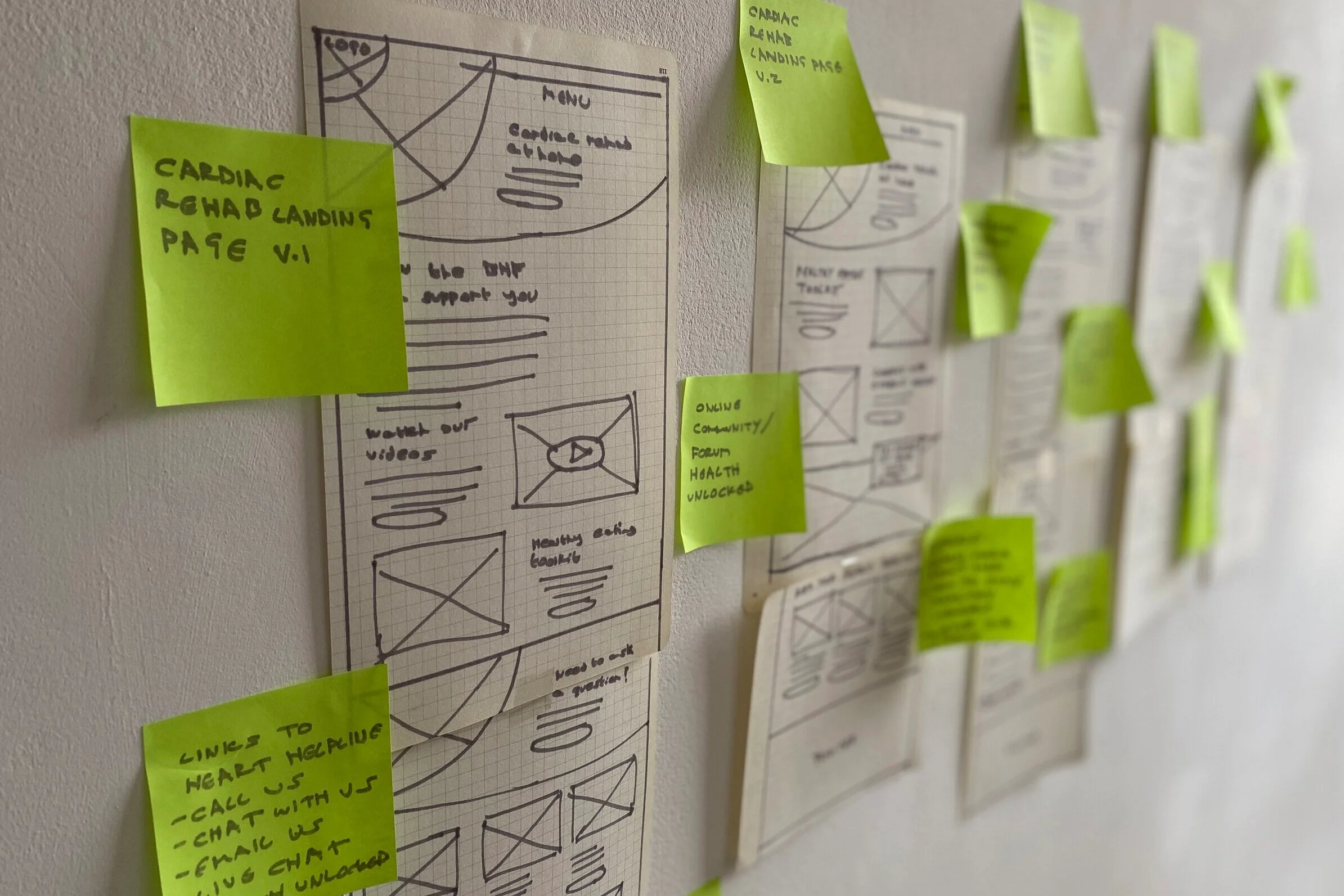
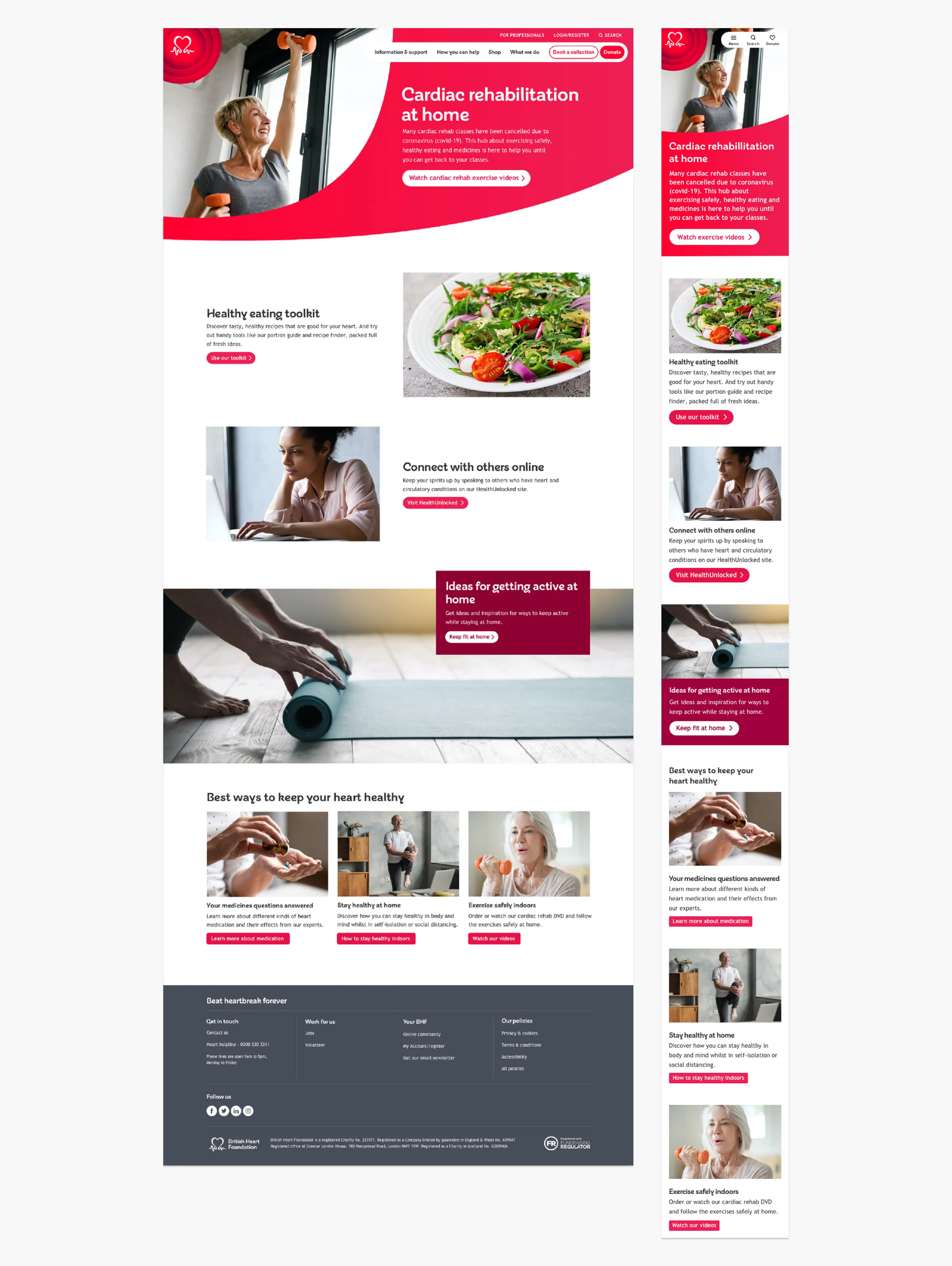
Using what we understood about our audiences so far, I was briefed to design a ‘Cardiac rehabilitation at home’ hub that links to new and existing heart health information.
Sketching
Final designs
Survey & insights
Online survey
I then set up and analysed results from a Qualaroo user survey that launched on the landing page and surrounding pages on desktop and mobile. 826 users participated in the survey.
Quantitative feedback
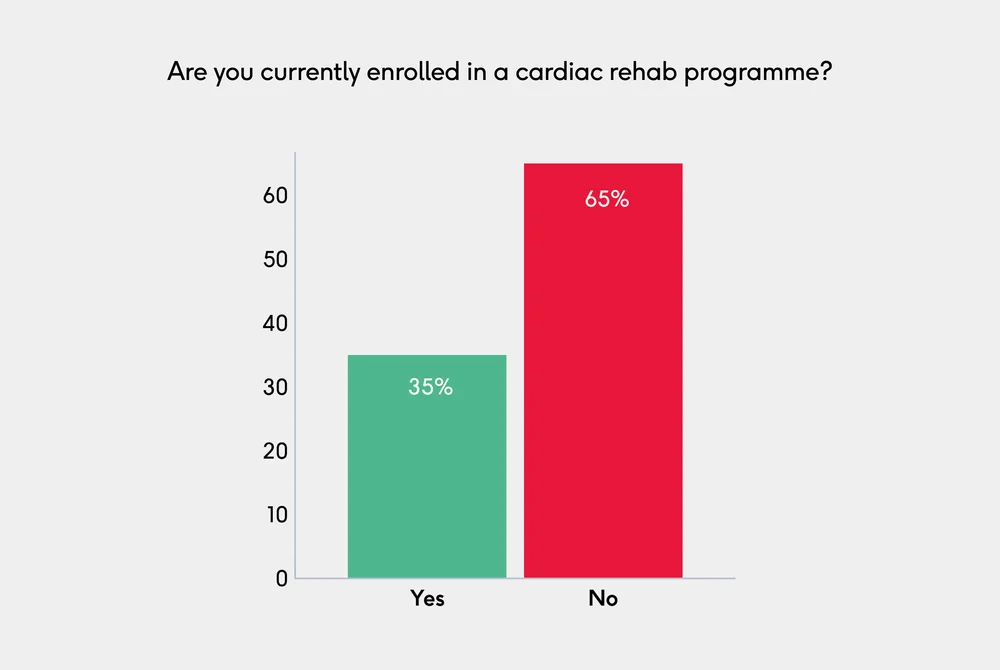
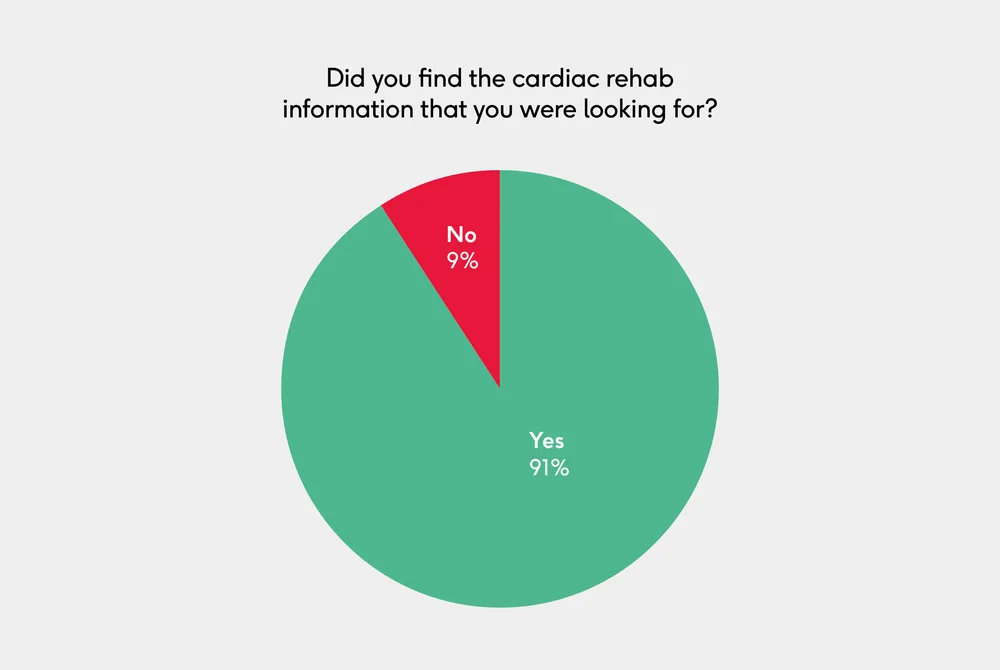
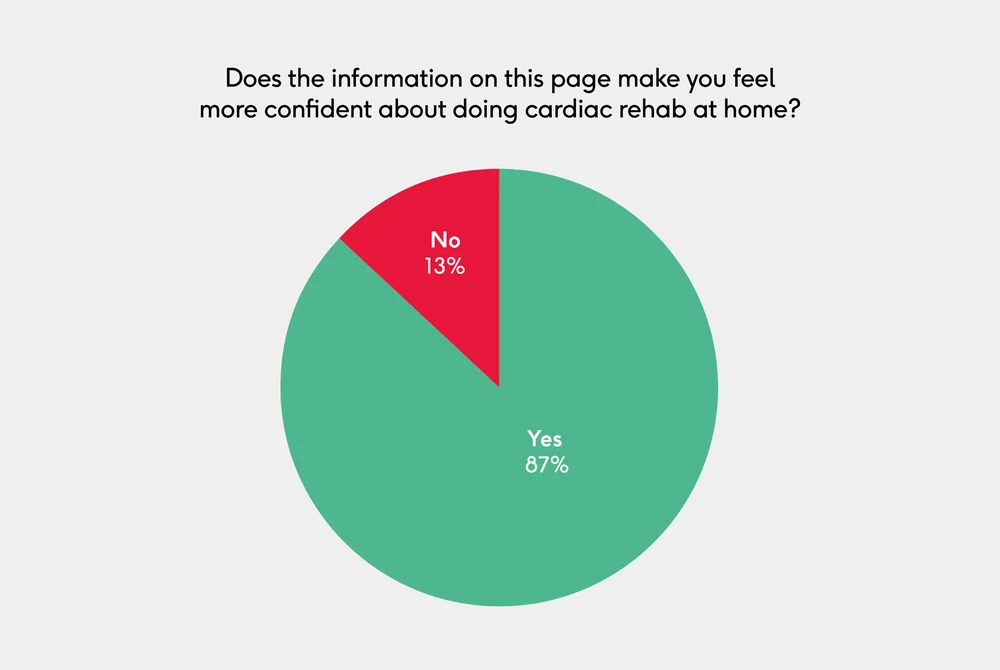
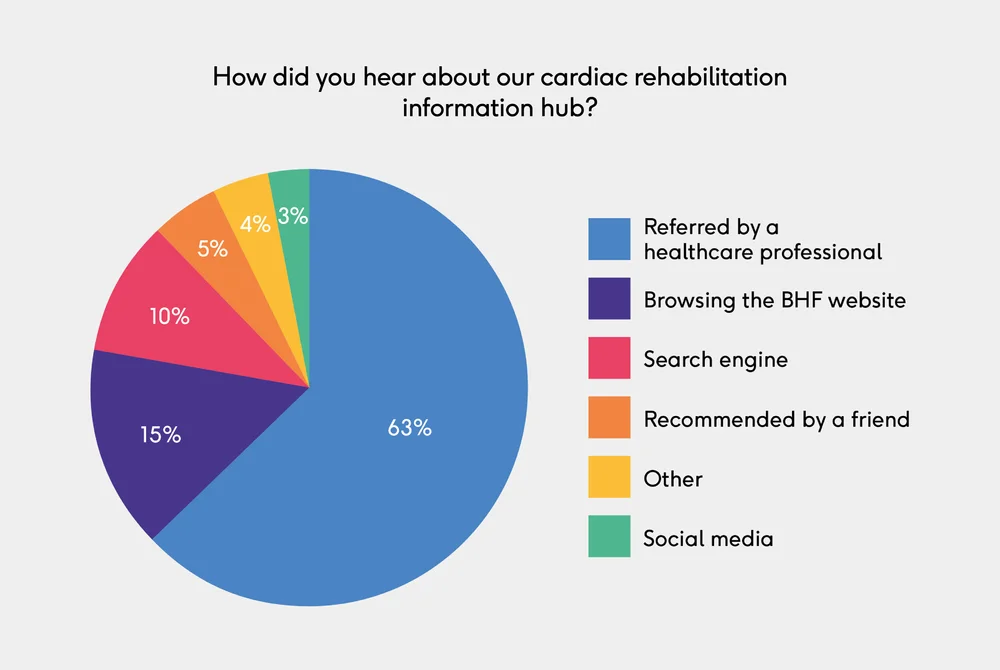
Qualitative feedback
The following themes emerged in response to ‘Can’t find what you’re looking for? Please let us know what information was missing from this page’:
- Assessments
- Condition information
- Exercise information
- Exercise videos
- Speaking to someone directly
Research insights summary
Emotional support
Patients experience a huge range of emotions after a major heart event. 58% are sad or depressed and feel uncertain about the future. Emotional support is vital to their recovery and ongoing wellbeing.
Motivation
Many patients will drop out of cardiac rehab after just one class. Involving family may help improve attendance, and lifestyle adjustments should be realistic and achievable to keep patients motivated.
Inequality in the current system
Cardiac rehab is a postcode lottery. Some people with pre-existing mental health conditions may not be able to access classes, plus those with mobility issues or without a driver’s licence may not be able to physically get to the class.
Further insights pointed to a lack of personalisation across age groups and lifestyles, a need to reframe rehab as more approachable rather than overly medicalised, and a current uptake of just ~50% against a target of 85% by 2028. Competitor products – from Macmillan Cancer Support to Headspace – showed how personalisation, community, tracking and realistic goal-setting could help close that gap.
Results
One month review (05/05/20)
Since going live on 02/04/20, the cardiac rehab landing page had 6,064 page views and 4,146 unique page views. 58% were returning visitors, suggesting they were coming back as they found the content useful. The exercise videos page was more popular with 8,905 page views and 5,963 unique page views.
We have been using the British Heart Foundation website whilst we have not been able to undertake cardiac rehabilitation face-to-face. The resources are fantastic and we have had good feedback from our patients.Cardiac Specialist Nurse, Surrey & Sussex Healthcare NHS Trust
Two month review (30/06/20)
The above feedback was incorporated to ensure the pages better fit the needs of our users. In June, I ran a follow-up survey to measure confidence. 98% of 247 users said the provided information made them feel more confident about doing cardiac rehab at home, an increase of 11% since April.
Article on remote collaboration
Following the workshops, I co-wrote an article for BCS, The Chartered Institute for IT, titled Remote working: how to drive innovation and collaborate effectively.
A respectful and inclusive guide about how to utilise online collaboration tools and workshopping techniques to foster an inclusive culture that nurtures the ideas of team members while working remotely.Johanna Hamilton, Commissioning Editor at BCS, The Chartered Institute for IT
Testimonials
Deborah is a joy to work with! She is an extremely talented designer with a natural user focus. I was lucky to have her join my Product team; she immediately added value.Katie, Digital Product Manager at the British Heart Foundation

I loved working with Deborah! She’s incredibly proactive, thorough and a team player with outstanding user-centred design skills.Emilia, Brand Manager at the British Heart Foundation
I’ve worked with Deborah for ten years and can confidently say she’s one of the best. She takes the time to understand a brand’s visual identity and develop content that is consistent, accessible and effective.Kimberley, Brand Manager at the British Heart Foundation